Iconic Branding: The Poker Game Logo Vector for Modern Business
There is a reason why the imagery of a deck of cards has transcended centuries to remain a powerful symbol of strategy, luck, and high stakes. For entrepreneurs and designers today, capturing that intensity requires more than just a generic clipart file; it demands precision, scalability, and a touch of elegance. If you are building a brand that relies on themes of entertainment, strategy, or sophistication, the visual assets you choose are the foundation of your credibility. This is where a high-quality vector icon becomes an indispensable part of your design toolkit.
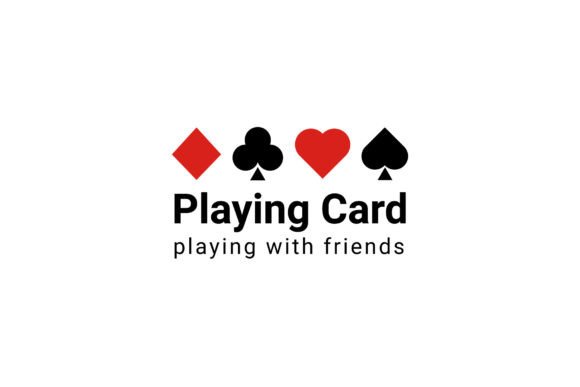
The specific asset we are discussing—a fully editable Playing Card Poker Game Logo Vector Icon—offers a distinct advantage for creative professionals. Unlike raster images that pixelate when you try to stretch them for a billboard or shrink them for a favicon, this professional logo template is designed in 100% vector format. This means the mathematical curves of the design remain crisp and clean whether you are printing a massive trade show banner or designing a tiny app icon. The "simple and elegant" aesthetic mentioned in the file description is not just about looking good; it is about versatility. A cluttered logo limits your application possibilities, whereas a clean, elegant vector allows the symbol to adapt to various backgrounds and color schemes without losing its identity.
Beyond the Table: Strategic Applications for Your Brand
When you download a package like this, you are not just getting a picture of a poker hand; you are acquiring a flexible design asset that can solve numerous creative problems. The inclusion of files like .ai (Illustrator CC), .eps, and .svg formats ensures that you can work with industry-standard software. However, the real value lies in how you apply this icon across your marketing ecosystem.
Consider the needs of a small business owner launching a poker night app or a physical card room. Visual consistency is paramount. You need your logo to look identical on your website header, your social media avatars, and your printed merchandise. Because the file is 100% editable and scalable, you can easily tweak the RGB colors to match your specific brand palette. Perhaps your brand uses a deep crimson and gold; with the vector file, you can recolor the cards in seconds. This level of customization transforms a generic template into a proprietary brand mark.
Furthermore, the utility of this asset extends into editorial design and content creation. If you are a blogger writing about gambling strategies or a marketer creating a guide on "taking risks in business," a high-quality vector icon serves as the perfect visual anchor. It elevates a standard blog post into a professional piece of content. You can use the icon as a drop cap, a section divider, or a background watermark. The transparency background included in the .png files makes layering the icon over photos or textured backgrounds seamless, ensuring your web design remains uncluttered and professional.
Ensuring Professional Presentation and Readability
One of the most overlooked aspects of using graphic elements in branding is how they interact with typography. A logo or icon must exist in harmony with your chosen typeface. The "simple and elegant" nature of this poker icon makes it an excellent partner for a variety of font styles. If your brand voice is authoritative and luxurious, you might pair the icon with a serif font. If your brand is modern, fast-paced, and tech-focused, a sans serif font provides a clean counterpoint.
When utilizing the editable font features often found in these logo templates, you have the opportunity to test different font pairings before finalizing your design. This is crucial for brand recognition. You want your audience to instantly associate the card icon with your specific logotype. By keeping the icon vector-based, you ensure that it does not suffer from quality loss when placed next to high-resolution text, maintaining a professional presentation across all mediums.
For those working on packaging design or print materials, the "print ready" nature of these files is a lifesaver. Converting RGB colors to CMYK for printing can sometimes distort the vibrancy of a logo. However, starting with a clean vector source file gives you the control to adjust color profiles for perfect reproduction on physical goods, whether it is a deck of custom playing cards, a poster for a tournament, or invitations to an exclusive event.
Practical Tips for Implementation
To get the most out of your design assets, you need to approach the implementation with a strategy. Here are some practical observations for integrating this poker game vector into your projects:
- Scalability Testing: Before launching, test your logo at extreme sizes. Open the
.svgfile in a browser and zoom in to 500%. The lines should remain sharp. This confirms the integrity of the vector paths. - Contextual Versatility: Place the icon on both light and dark backgrounds. A well-designed vector often uses negative space effectively. If the icon gets lost on a dark background, use the editable features to create a light-mode and dark-mode version of your brand mark.
- Merchandise Mockups: If you plan to sell merchandise like t-shirts or mugs, import the
.epsfile into your mockup generator. Ensure the design looks good on curved surfaces, which often requires simplifying the design—another benefit of the "simple and elegant" aesthetic.
Ultimately, the goal of any creative entrepreneur or designer is to communicate an idea instantly. A Playing Card Poker Game Logo Vector Icon communicates risk, reward, and entertainment in a single glance. By utilizing the fully editable nature of the files and paying attention to how the icon pairs with your broader modern typography, you create a cohesive visual identity that resonates with your audience and stands the test of time.